Saturday, 24 September 2011

“It really doesn’t matter that much”


“It really doesn’t matter that much”
Is climate change for real? Are the oceans really rising and the glaciers shrinking? While most of would definitely answer the above questions in the affirmative there are still many amongst us who would still say that they aren’t that sure. They call themselves the ‘Climate Change Sceptics’.

As has been rightly pointed out if we look at the history of mass extinctions we would learn that right now we are in the midst of the sixth major mass extinction. So, obviously there have been changes in the earth’s climate before this right? Yes, that is true; but that’s not the whole story.

It has been estimated that within the last five hundred years, at least eighty mammal species have gone extinct; this from a starting total of approximately 5,570 species. Now compare this to the average extinction rate for mammals of less than two for every million years. I am sure you don’t need any help with the math; it’s clear as daylight that the present rate of extinction is far greater than the average extinction rate previously. The other question is the reason behind this extinction? I’m am pretty sure, climate sceptic or not there is absolutely no doubt that this extinction is anthropogenic. In case of any lingering doubts one can easily check into the history behind the extinction of the dodos, the Javan and the Caspian tigers, the cheetahs in India and numerous other plant and animal species (even if the example was about the extinction of mammals this phenomenon is not limited to mammals alone).

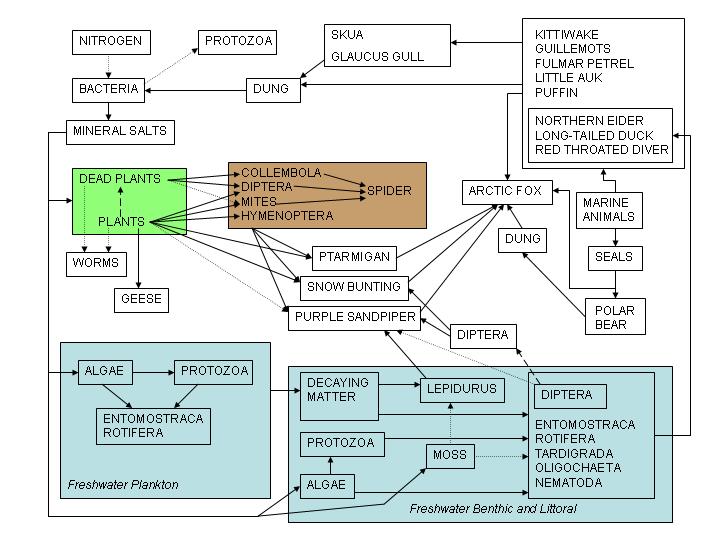
Then should you be worried? Allow me to digress a bit and explain this with a short story. There is an oft quoted example where the earth is compared to an aeroplane and human beings to mechanics. We sit inside the aeroplane and then slowly start to unfasten all the screws in the whole aeroplane. Let us say, we start from the inside first and get rid of all the seats. No doubt the aeroplane will still fly. We then continue our experiment for a little while further and keep testing each time if the aeroplane still flies. Slowly once we had rid ourselves of all trivial screws we will eventually need to start medalling with the screws that keep the whole structure together. Eventually we reach a point where every new screw unfastened could be our last. If we go ahead and unscrew both engines the result is quite obvious. It isn’t going to matter that there are still so many screws left to unfasten. The whole system is definitely going to crash. Now, to explaining why I used this metaphor. Compare each screw lost to a species gone. The disappearance of one species isn’t obviously going to bring to whole eco-system down. However, slowly as more species start to disappear the web of life would start to become unsustainable. The predator-prey relationships would begin to become skewed favouring one side over the other, in the end leading to a dramatic collapse of the whole complex web of life. This is not taking into account the fact that most niche species and species in symbiotic relationships would be dead long before we ever got to this stage. 
http://www.bigelow.org/edhab/fitting_algae.html


Victor Summerhayes and Charles Elton's 1923 food web of Bear Island
 http://en.wikipedia.org/wiki/File:EltonFW.jpg


Then is conservation important? Altruism isn’t a trait everyone is blessed with. Why worry about saving the earth, conserving minerals and electricity etc.? If I have the money then what pray is your problem, aye? The wars on oil don’t directly affect me; they are being fought in far-away lands. Just ensure that it still remains affordable and cheap. Kill as many as you want for it! Why should the displacement of tribal people in some distant and remote place bother me? I need those rare earth metals, for my music player to work don’t I?    

There are economists who claim that the cost of investing into green and eco-friendly technologies will cripple us so much that financially most large industries will have to shut shop. I don’t claim to know too much economics but I am sure that money spent on investing in better effluent discharge, better energy efficiencies etc. will probably do more good than harm. It has been proven worldwide that it is better to invest in more efficient technology now and pay less every month on maintenance than ending up footing higher recurring costs. If you add to it other benefits like lower particulate emissions, and less toxic discharges, it makes more sense to go green than to resist. The motivation really doesn’t matter; you could be an environmentalist or be in it for selfish reasons of leading a more luxurious life.  It is better to conserve now and have something for the future. Think of it as an investment. What is likely to be in high demand a decade from now will also obviously also fetch you a good price a decade from now too.

Here is one of the most persuasive letters to the editor I have read in recent times. The reply was to an article by Friedman in the New York Times titled, “Is it Weird Enough Yet?” Here is an excerpt from it; 

“The French philosopher and mathematician Blaise Pascal, in what has become known as Pascal’s wager, suggested that even people who did not believe in God should act as if they did, since being wrong could be catastrophic.

I would say to the climate skeptics[sic]: If you do not believe in climate change but act as if you did, even if you are right, the result would be a society with clean, sustainable jobs, less dependence on Mideast oil and healthier lives. But if you are wrong and we do not act immediately, the results would be catastrophic.”
PHILLIP GOTTSCHALK
Montville, N.J., Sept. 14, 2011

Mukund Palat Rao (September 20, 2011)
P.S Here is two interesting videos you might like to watch
The first video is from the Rio Summit of ’92.

Wednesday, 24 August 2011

Nadia of the Nile


Nadia of the Nile

This is a story from a long time ago,
A time when I was young and not so very old,
I was in the midst of a journey from Beirut to Tehran,
I had stopped in the desert to rest for the night,
It was cold, it was freezing,
Not a soul could be heard,
I was singing to my camel and putting her to sleep,
Rest was imperative, as from our destination we were still far.

Suddenly out of nowhere a voice awoke me with a start,
Do you mind if I could spend the night in your caravan?
To this I enquired, ‘What name do you go by?’
And then she replied, ‘I am Nadia of the Nile,
I was robbed of my tent in a skirmish by the town,
The wind, it is biting, and I am chilled to the bone,
I think I am injured and can’t carry on.’

I then told her she could spent the night in my tent,
But I secretly kept a sword by my side,
For you never know,
When the enemy is behind your back,
Being the host,
I then gently asked, ‘Would you care for some wine?
Your injuries are deep,
It might get better with the tincture of Iodine?’

And there I was kneeling and tending to her wounds,
There was as shard that was entwined in her back,
Even as I eased it out gently I knew it did hurt,
But from her side not a sinew did twich,
She continued to sit motionless with her clenched her jaw,
Without a sound she just gazed into the fire.

On her these wounds of war didn’t seem like aberrations,
They fit perfectly as a part of a beautiful whole,
With a body so graceful and green eyes so watchful.

In our mirth, we talked and we talked and conversed through the night,
It was cold, it was freezing,
And not a soul could be heard,
And we drew closer and closer until we were one,
But then as I was drifting into a slumber,
She told me she would depart by first light.

I don’t remember the time,
Except a kiss on my cheek,
She mentioned she was leaving and thanked me for everything,
And then she waited till I fell back asleep.

In the morning when I awoke,
I wasn’t sure if it was a dream,
But when I looked around; and I found my things gone,
I knew they had been stolen,
By Nadia of the Nile,
Except my camel now sitting,
With a look so benign.

Beside me lay my empty trunk,
Inside was a note pinned to the front,
It read, ‘I am indeed sorry for what I have done,
My story was true,
And I have no doubt that you saved my life,
Unfortunately I was paid not to leave you alive,
Last night when I came I was in too much pain,
And by the morning light I knew I would never be the same,
I knew I couldn’t kill you,
And I promise you’ll never see me again.’

I wept for my loss but thanked God I was alive,
I knew I was lucky for she didn’t get what she desired,
The papers, they were tied to the foreleg of my camel,
And those in my trunk; they were counterfeit,
But this I did realise that she’d probably have to die,
The fakes that she had obtained, they weren’t worth a dime,
And those who had paid her would slay her in their anger.

I cried for I knew it was because of me she would die,
And if I were dead she would still be alive.

Mukund Palat Rao (August 8, 2011)

Thursday, 7 July 2011

It has been a while!

Yes, it has been a long time since you last heard from me. Lots of things have been happening the last couple of months. However not too much of it has had a chance to be reflected on the blog. As you would have noticed the name of the blog has been changed. No longer is the blog 'Wandering and Pondering'. It seems to have found it place in the world and now indulges in 'Ruminative Reminiscence'.

Sometimes even small things have an impact on us. Even if we don't realise it at that time, it is these experiences in the past that make you who you are. There were thoughts that were never expressed consciously and yet they were there, dormant and just waiting to be expressed. Such is the story of the explanation of the blog's title.

Wednesday, 6 July 2011

Who is the Protector?

Who is the Protector?

Around some corners you still can see,
Lone walls, charred, burnt and crumbling,
Testaments to an old and violent painful past,
Remnants of houses now long deserted,
With its inhabitants either fled elsewhere or killed. 

In odd places in the midst of fields long and wide,
Lie hoards of forgotten and unmarked graves,
A grim reminder that the present carries the burden of the past,
And cannot be washed or wished away.

They say it was all in the name of God,
Heretics and infidels had no right to life,
And that revenge must be sought for unrelated sins.

The murders and rapes were all to appease the Gods,
For they had been insulted and blasphemy was rife,
And yet they considered God an all powerful being,
Omniscient and omnipresent.

This a contradiction in itself,
Why does the Almighty need protection,
From the vagaries of mankind and his daily life?

Mukund Palat Rao (July 6, 2011)

Sunday, 24 April 2011

World Earth Day

April 22nd was celebrated as World Earth Day. In case you missed all the latest with regards to the Earth Day including the Google doodle, here is an article I wrote on the occasion.  Hope you enjoy reading it!
Regards,
Mukund
P.S Have a nice Easter weekend!

Saturday, 23 April 2011

An Elusive Bronze-back and other Adventures


An Elusive Bronze-back and other Adventures

I spent the last weekend at my grandmother’s house in Palakkad (Kerala). Every weekend I have spent there has always had its share of excitement and adventure. Yet each experience has been distinct from the other. This weekend was perhaps quieter than those before, but it wasn’t bereft of new things to learn. It is amazing how much one has yet to learn, but this should never overwhelm us. It should instead inspire us to continue learning.
The weekend started off with a better understanding of the war between the termites and the red ants. In my travails through my back garden I chanced upon a few old branches infested by termites. The termites had constructed passages and tunnels to ease their work. Unwittingly I stepped on a few termite infested branches and immediately there was a flutter of action and the exposed nest was pounced upon by the red fire ants. Kerala is full of them and these and are one of the fiercest insects I’ve ever seen. They pounce on any opportunity presented to them and the poor termites stood no chance at all. Over the years I’ve come to admire the way these ants organize themselves and go about protecting their nest. Just a couple of days ago I read this insightful article by Ranjit Daniels on, ‘Ants as Biological Indicators of Environmental Change’. His research has shown that generally the diversity of ants in a given area is representative of the overall environment degradation, or the lack of it. Though for some reason I don’t seem to remember these fire ants as being so ubiquitous in Kerala in my childhood. I definitely wouldn’t like to be stuck atop a mango or jackfruit tree in the midst of an ant attack, and as a child I scarcely remember that ever happening to me. Now every tree seems infested with them and they don’t seem picky about their food. I’ve seen them even prey upon snakes which haven’t been able to escape their burrows in time and even upon hapless chameleons. I cannot vouch for it but I’ve read reports that this particular ant is a foreign species to India and came on boats to India from South America (Brazil). It is also commonly known as the red imported fire ants.
Classically ants are classified as terrestrial, arboreal and fossorial; with terrestrial and fossorial being the most common. India is home to at least over 600 species of ants. (Number of species known to us is approximately 7600). My experience suggests that these particular ants have mastered at least two of the niches with effortless ease. I’ve seen their nests in tree leave bundled together (arboreal) and they seem to have taken quite a special liking towards mango trees (much to my dismay). I’ve also found these ants equally adept at scurrying the forest floor in search of food (terrestrial). They are quite comfortable beneath dead leaves, stones and logs. I've also seen them build permanent nest deep in ground. However I have not seen the characteristic ant hill that ants are associated with (fossorial). The picture attached will give you a better idea of the ants I’m talking about. 
Every evening I generally walk down a few kilometres to a canal close to my house to watch the sunset. (The same spot which inspired me to compose ‘Carpe Diem’. To read it please visit- http://mukundpr-mytheories.blogspot.com/2011/01/new-poem-carpe-diem.html) However on that particular day I got a bit caught up at home and was able only to walk across to a fallow plot which my parents own downhill from my grandmother’s house. Perched atop the compound wall with my feet dangling six feet above the ground I witnessed a particularly rewarding evening of bird watching. I didn’t spy any rare species but it was one of those evenings where as a birdwatcher you learn new things about birds and their habits. It all started off with a fight between three brahminy kites over some prey caught earlier in the evening (a large mouse I believe). Initially there was this lone kite perched upon a water tank about fifty metres from where I was on the wall. It appeared to be feasting upon some prey which it had caught earlier in the evening. A couple of minutes later he (I’m not that sure but it looked like a lone male) was joined by a couple of guests who came over for dinner, uninvited obviously. So he tried to flee taking the dinner along and soared high into the sky with the mouse in clutched in his claws. Unfortunately the other couple weren’t to be out done so easily. They caught up with relative ease soon there was a bird fight accompanied by scratching talons, pecking beaks and plenty of oud screeching. There was this moment where all three stopped flapping their wings and were locked in a three way battle (two versus one actually), and they started descending and falling down the sky at an alarming rate. It was a test of who could hold on to the prey the longest before they crashed into the ground. Just ten metres off the ground the lone kite finally gave up on his claim to the feast as any respectable dinner host does and the visiting pair was allowed to claim their prize, which they took back to the water tank and shared in peace. 
A brahminy kite
Less than ten metres from where I was perched was a house with had nestling magpie robin chicks in an electric meter box. Quite a dangerous place to be brought up with electric fuse wires close by, I must say. It had a very small opening just small enough for the parents to squeeze through but away from the reach of prying cats and birds of prey. The poor chicks had to wait for over an hour before their parents returned with food during which time the continuously kept calling out to their parents to return. Besides the kites and the magpies I spied a couple of white breasted kingfisher, some chestnut headed sunbirds, lots of egrets, a pied kingfisher, a crow pheasant, and many jungle crows and city crows. 
A magpie robin
Finally now I take you to the story of the elusive bonze-backed tree snake. I need to take you back further by a week to tell you about this story. So on that fateful weekend I was alone in my grandmother’s house in Kerala as she had not yet returned from my Uncle’s house in Madras. So, I spent the late evening I walking along the back garden searching for interesting finds. It’s not a garden really but common courtesy dictates that houses have gardens and not wild uncontrolled plant growth. It was then I heard the characteristic rustling of leaves just behind me. It’s the sound everyone dreads (well almost everyone; I was in fact hoping that I would chance upon such an opportunity). I was fully prepared for this and I turned back swiftly, to see out of the corner of my eye, a two and a half foot long, slender and thin bodied able snake slink back into a creek in our old discarded well. After crawling back in, it then slowly brought its head back out about half and inches from between the bricks and stared back at me with its beautiful large black eyes for a good two minutes. Then finally it retreated back into its mini-cave. But those two minutes were beautiful; two minutes of perfect bliss. I could hear my heart beating and the feel the adrenaline pumping, and yet we had this perfect understanding. This wasn’t however the last I saw of the snake. After I’d seen the snake’s burrow the first time I spent many an hour waiting patiently next to it in the hope that the snake would venture out again. Much my dismay in those many hours spent waiting for the snake to appear again I managed just one more fleeting glance during the whole weekend. After I saw the snake for the first time I noticed that it had just shed its skin a couple of days ago and that was probably the reason why it looked such a stunning and beautiful brown. Unfortunately the creek was about five foot deep into the well and even though the well isn’t used anymore and has been filled up with dumped bricks the shed skin was just out of reach. Else I would have got a better photograph of it. I wasn’t able to extract it with a short stick either because at many places it was wedged between adjacent bricks. Over the years I’ve collected many snake skins with the longest I’ve found measures in at almost 7 feet. Earlier I used to collect them and bring them home. Now I’m not so fascinated by them anymore and I generally leave them where I found them after a short examination. This is not because I subscribe to the theory that it begets bad luck or it’s something dirty, but more because I feel that we should let things be instead of trying to disturb the natural surroundings.
The reasons that led me to identify the snake as a bronze-back were a characteristic thin tail, very large eyes set into a small thin and slender face and its extremely swift movement. I must add that the wait was agonisingly painful compounded by the hundreds of mosquitoes and red ants which bit me all over. If a question of why I didn’t use a mosquito repellent like odomos or the traditional lemon grass oil before venturing out popped up in your mind then let me take to opportunity to answer that here. Never use any strong scent or perfume before you go tracking. It’s a dead give-away of your identity and exact position. If you take the example of tracking a snake then you should know snakes have both very good eye-sight and an excellent sense of smell. As compared to most animals (more so reptiles) we are already at a huge disadvantage because we don’t have heat sensitive infrared vision. Endowed with such vision it is very easy for a snake to detect your presence long before you know where they are. If you wear any scents it puts you at an even greater disadvantage. Snakes can taste the air with their forked tongue and any scent will make it that much easier for them to detect you. 
A spectacled cobra from a field near by. Do notice the bulge in its stomach.
Over the years I’ve had many great experiences with snakes and each has one of them has always left me with a feeling of great respect and admiration. However every time I’ve seen snakes I’ve never felt the urge or inclination to trouble them by trying to pick them up or extract them from their burrows. I’ve tended to leave them on their own and have been satisfied with observing them from a distance.
Each animal has its own distance of comfort. It is very important that we know of this beforehand, either intuitively or after a bit of research. Over the years I’ve come to understand that each snake species too has a different distance of comfort. With a whip tailed wine snake (of which I have attached a few of my photographs from my trip to Agumbe), I realised the key was staying just far enough so that the snake couldn’t whip at you. This allows you to get to about six inches to the snake. It is important that we never try to corner an animal or move in an intimidating manner towards it. Never stare into its eyes, always look at it for a few seconds, keep blinking and keep your head as low as possible. The smaller there is a lesser chance that you’ll be perceived as a threat. The larger the snake the further away you should stay. A two and a half metre rat snake even after I disturbed it and caused it retreat and unwittingly wedge itself in corner with walls on two sides permitted me to creep to just about two metres from where it was. Now obviously a rat snake isn’t poisonous but a bite from it can be pretty nasty and besides, who’d like to be bitten by a snake? The trick was coming in parallel to the wall ensuring that the snake understood that it had an escape route. 
A whip tailed vine snake at Agumbe
Up till now my policy of not troubling a snake has always held me in good stead. A few years back on a hillock at the Rishi Valley School in Chittor, Andhra Pradesh, a small one and a half foot snake crossed extremely close to my feet (just a few centimetres off my toes to be more precise). I was very tempted to pick it up and put it in a bottle and then keep it for a while and release it downhill. In the end I thought the better of it and let it be, even though the snake seemed least perturbed by my presence. It was only recently that I came to realise that the beautiful snake I saw in the Rishi Valley with alternate white and black bands was the much feared ‘banded krait’. The named obviously being derived from the alternate white and black bands like in a zebra crossing. Its neurotoxic venom is so poisonous and potent that the banded krait is also know as the two step snake. It is believed that the victim once bitten would be dead within their taking two steps. Even if that is an exaggerated account the venom is indeed extremely poisonous.
A whip tailed vine snake at Agumbe
With a rapidly shrinking habitat to which Kerala is no exception there are an increasing number of cases of man-snake conflicts. However in my all my experience I’ve never yet been threatened by a snake. I can safely add that snakes are gentle creatures and all long as we give them the respect they deserve they will never deliberately attack humans (a lone exception might be a python attacking a small child, though in general they refrain from doing so.) Sorry, no pun intended. The myth that snakes are vicious and violent creatures that attack humans on sight is completely untrue. They’d much rather slink away into a dark corner and hide until the danger has passed. I think
there is no need for us to fear snakes and it is snakes that fear us in fact. I’m absolutely certain that with a certain degree of mutual respect snakes and humans can exist peacefully sans any unfortunate untoward incidents.  
Mukund Palat Rao (April 23, 2011)


The sunset in the evening

The remnant snake skin after the snake shed it
The remnant snake skin after the snake shed it (From the bronze-back story)
Chestnut headed sunbirds

A egret and a cow
 (All photographs and videos courtesy Mukund P Rao)