Wednesday, 17 November 2010

My trip to Agumbe

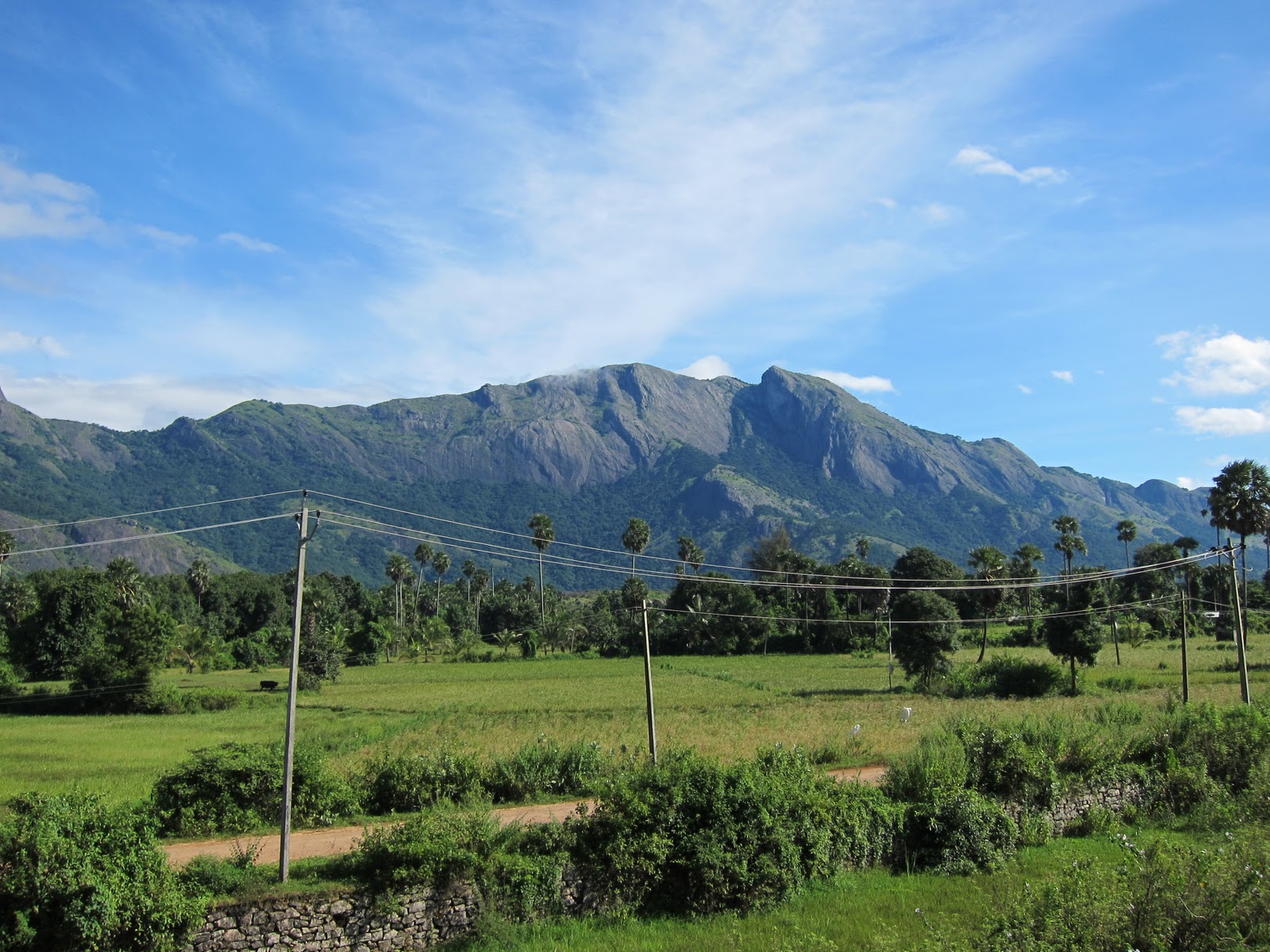
The hostel is an eerie quiet with all most everyone having gone home for Diwali. With too many people around you are sucked into a kind of humdrum existence and it’s only once you’re alone does one have time to think and introspect. Here on one such day I present to you a travelogue of my trip to Agumbe.

I left here (college) late on the evening of Friday the 29th of October accompanied by three of my friends. We boarded a local passenger train to a place called Palakkad (also known as Palghat or the Gateway to Kerala). Palakkad is the first major town in Kerala whilst entering it from Tamil Nadu and incidentally it’s a place I call home too (besides Delhi of course). After supper at Palakkad, we boarded the West Coast Express at the Palakkad Junction railway station and reached Mangalore Central Railway station early on Saturday morning (5:30 am). From there we caught a bus which took us to a town called Udupi which is situated about sixty kilometres to the north of Mangalore. Udupi is a town famous for its excellent South Indian food and especially, its sweet sambar. Unfortunately we could not partake in the luxury of a delicious breakfast at Udupi as we were pressed for time. After a quick bite we headed off to Agumbe.


To put things in a better perspective Agumbe is sixty kilometres from Udupi. After completing two thirds of the journey we crossed the village of Hebri and ascended into a very steep climb with a series of tight hair pin bends. On surviving three quarters of hour on the hilly road we finally reached the village of Agumbe. Upon reaching Agumbe we headed off to the Agumbe Rainforest Research Station (ARRS) base camp.(http://maps.google.co.in/maps/ms?ie=UTF8&msa=0&msid=107726479902280188831.000495433acb4d1b03288&ll=13.151702,75.333252&spn=1.136657,2.705383&z=9)

The ARRS was set up in 2005 by the renowned herpetologist Romulus Witaker. Agumbe is known for its high density or snakes and is also known by its apt sobriquet, ‘The Cherrapunji of the South’. On an average it records the second highest rainfall in India. Incidentally the filming for the famous tv series on the ‘Malgudi Days’ was done at Agumbe.

After a slight detour where I lead my friends astray, we finally reached the ARRS at around a half past eleven. We met a few of the researchers out there and understood what kind of research work is being undertaken at the centre. We learnt about the King Cobra telemetry project aimed at understanding the habits of Kings and how they are evolving in order to survive co-habitation with humans. A project to learn about burrowing habits of scorpions (how long they burrow, why they burrow etc). Besides these projects we also learnt and discussed about various other projects including, some studying the Seetanadi River, the amphibian bio-diversity, weather monitoring to understand the impacts of climate change et cetera.

We observed a project aimed at studying as to why Flying Lizards (Draco dussumieri) show FSSD (Female-Biased Sexual Skewed Dimorphism); i.e. females are larger than the males. This phenomenon is quite rare in lizard species. (http://en.wikipedia.org/wiki/Draco_dussumieri). We spent a good three quarter of an hour with the researcher studying lizard behaviour by observing the habits of a courting lizard pair. We then went about exploring the base camp and searching for snakes around the base camp for a couple of hours; in the end all we found was just a Green Vine snake.
 
From the base camp we went to a waterfall called the Jog Gundi falls.  After spending five minutes there, our auto driver told us about another waterfall called the Onake Abbe falls (pronounced Onkebee). ‘Onake’ means a pounding stick which is used to pound grains in villages. The falls look like a thin stick falling from up above. Our auto driver warned us about a two and a half kilometre trek with an abundance of leeches. This warning just wasn’t enough to prepare us for what was to come, neither the leeches nor the sheer beauty of the waterfalls. Enduring the wrath of these blood sucking creatures was well worth it because of the sublime and picturesque sight from the top if the falls. Standing two feet away from the precipice with the whole valley below you gives you a feeling that nothing else can compare with. What we thought as five minutes of gazing into the valley below actually turned out to be an hour. That by far exceeded our original intention of spending a quarter of an hour at the falls.

By now it was five in the evening and we decided it was time to head back to the main road in order to reach the Sunset point in time for the sunset. Imagine a sunset at the highest point on a mountain with a sun setting into the sea (Arabian Sea) at the horizon. Below you are forests as far as the eye can see and the sky is dotted with approaching clouds; a harbinger of rain later in the evening. The sun looks a majestic red orb and its rays are interspersed with the clouds painting the sky like a work of art that can be equalled by none. Such was the sunset at Agumbe.

It broke my heart to leave, but my friends at friends at Manipal awaited my arrival and so the departure had to be made. I left with a promise that someday I’d be back at Agumbe maybe working at the ARRS on a research project (a butterfly biodiversity or a snake mapping project perhaps). Until that day comes I must remain content dreaming about the majestic Agumbe sunset I once saw.

For the photographs of this visit please visit http://www.facebook.com/album.php?aid=302861&id=653528713&l=2fe05cf61a
  
P.S: As a child after every school trip or journey out of town, my parents always told me, ‘Son, please do write a report on your most recent travel/expedition.’ As any dutiful son would do, I quite wilfully disobeyed them. So here I am with my first write up about a trip which has not been forced upon me. To my parents I could add, ’It’s okay, some children just learn late.'

P.P.S You could click on the photographs to get a better look at them. Except one photograph none of the pictures below were taken on this trip. To have a look at the photographs taken on this trip please click on the above mentioned link. 


A common ground yellow


A tiger
All photographs courtesy Mukund P Rao

Friday, 12 November 2010

Poem: A Secret Enigma

A Secret Enigma

There are secrets behind everything,
Every face and every smile,
Each action of yours or mine,
Secrets, they shroud each and every thing.

As I look into that damsel’s eyes,
There lies a secret behind why last night she cried,
And now when I turn to look at a friend of mine,
There is a story behind that long drawn sigh.

As I gaze upon the mountains tall,
There is a story and secret as to why they’re there,
And buried under them are fossils from a sea long dead,
To unravel it be inquisitive,
And enquire how, why, when and where?

There is a secret behind why she’s a troublesome child,
An abusive father,
Or an absent mother?
There are always secrets,
And secrets explain everything.

There is a secret behind everything,
The world and why it was created amongst other things,
Does God exist or does She not?
Is there a pattern behind our flow of thoughts?

The intricacies in the web of life,
What holds it up and keeps it alive?
Does the universe hold planets just like earth,
Or are they so plentiful that there is no dearth?

Some secrets are meant for hiding,
While some are shared between a you and me,
Some secrets remain because there is no proof,
And no one has cared to uncover the truth.

But secrets are meant for keeping,
As long as it’s good they do,
And after all, secrets are secrets,
What fun would it be if everyone knew?

Mukund Palat Rao (November 11, 2010)

Sunday, 17 October 2010

Poem: A day in Dehlee

The Red Fort
A day in Dehlee

Dehlee’s joggers are the first to wake,
Running past old tombs maybe at the Hauz Khaz Lake,
Then cometh the sabzi wallahs on their ponies or hand drawn carts,
Aaloo bees rupaiya kilo, bhindi chowbeez rupaiya,
Not too far behind is the fruit man,
Kele, angoor, santre aur aam.

Still later when by the watch it’s ten,
‘KABAADIWALEEY’ is the cry you’ll hear,
Every day these men cycle up and down,
Help recycle all the newspaper waste in town.
After this when the time is noon,
You might hear a faint twang, twang, twang,
Signalling the arrival of the mattress man,
Playing upon his Jew’s Harp,
He’ll open up your mattress and fluff it up.


Taaze taaze phalse,
Thande meethe phalse,
Shrieks the hoarse voice of a white turbaned man,
While behind him you might hear,
A strange dhun played on the been,
O! Just hear them come, the snake charmers,
They bring with them scorpions and cobras,
That’ll amuse your children.

Maybe instead of the charmers might come the dancers,
With their bears and monkeys,
To the sound of the dumaroo,
They’ll do their little jig and jump through hoops.

Sometimes they come,
The Saadhus and the Sufi mystics,
Once came a man and an owl, with prophetic messages,
Said they descended from the misty Hindu Kush,
As he sat in the bazaar in a meditative trance,
Answering your queries about your future or finance.

Oh! And how may you forget the dhobiwalas,
They are the secret to Delhi’s clean clothes,
Those shirts’ and salwars’ prefect crease,
Are a result of paying the Dhobi-boy’s fees.

By now it’s evening,
The camembert Delhi sun is now a big red orb,
Your neighbours might come over for a cup of chai,
While you sit and rest upon your charpoy.

The moon has risen, and the sun has set,
But the chowkidar isn’t ready to sleep just yet,
Tuk, Tuk bangs his stick on the pavement,
Ready to warn passing thieves of his guarding commitment.
With every passing hour he grows dreary,
And chowkidari till six a.m had makes him quite weary.
But now again they do rise through the thick mist and fog,
The runners on their early morning jog.

The whole rigmarole begins once again,
And as it has now for centuries past,
Every hour brings with it a different visitor,
And you can be quite content just being a spectator.

This is Delhi,
(Yeh Dilli hai),
Aur yeh sheher nahi yeh mehafil hai,
Every day the play repeats itself once again,
The characters may change but the script’s the same. 

Mukund Palat Rao (October 17, 2010)
                                                                 
LEFT: The Safdarjung Tomb   (Safdarjang ka Maqbara)    RIGHT: The Qutab Minar

The Rashtrapati Bhavan

The ruins near the Hauz Khaz Lake


The Jama Masjid


There is a feeling that the nouveau rich Delhi population no longer cares for the old ways. But well sigh..
Maybe it was all part of the play script written with Delhi as the protagonist and all the transformations that she has undergone. The poem is an expression of some of the reasons why I love Delhi.

P.S: All photos courtesy Mukund P Rao

Friday, 24 September 2010

The Latest!

So here I am, back with a new poem. This time I've made an effort to add more of my pictures to the new post. The new name of the blog 'Wandering and Pondering', gives me more freedom to post pictures of my wanderings.

Poem: A Man atop a Mountain


A Man atop a Mountain

Sat a man atop a mountain,
And looked around to ascertain,
Whether there still lay a chance,
That we’d wake up from this trance.

To his left there were railway tracks,
Elephants crossing it were oft subject to train attacks,
The forests all around, high and near,
For timber and agriculture had been cleared.

Every snake spotted was beaten,
With clubs, sticks and batons,
(The crow-pheasants, kingfishers and the paradise fly-catchers,)
Those were once seen aplenty,
Weren’t sighted as often lately.

All the rivers and streams had been damned,
By sand mining, water pollution and the large dams,
While into the ground we drilled deeper and deeper,
As the confined aquifers receded further and further.

This did leave him quite aghast,
But he realised that all was not yet lost,
There still remained trees to cut and elephants to kill,
And ground water and oil wells to drill.

The fly catchers and pheasants still were seen,
Even though not as oft as it had once been,
The leopards, snakes, and tigers still were spotted,
Even if it were only to be hunted,

Things are bad,
But do not be sad,
Let’s be the change we want to see,
After all it’s drop by drop that you make the sea.
 
We humans have been blessed with everything we need,
Maybe just not enough to satisfy the greed,
But as long as you have everything you really require,
Then what pray is the reason for all these selfish desires?

Mukund Palat Rao, 24th September ‘10


All photos courtesy Mukund P Rao

Tuesday, 7 September 2010

The latest on the blog.

So here is the latest news on the blog. As you might have noticed the name of the blog has been changed. The blog is now called Wandering and Pondering. The explanation for the name is given at the top.

A few lines of my poem Accusations of a Caged Leopard have been edited and modified. This was done after I received some feedback which alerted me to an instance where there was an improper use of language in the poem. Thank you for your valuable feedback. To check out the edited version of the poem please click on the link below  http://mukundpr-mytheories.blogspot.com/2010/06/poem.html

Warm regards to all of you,
Mukund

Poem: A Dog's Life


All photos courtesy Mukund P Rao


                     A Dog’s Life

Amongst the sights that you see oft,
Here is one I like a lot,
And pray if you enquire as to what it is,
Here would be my reply,
‘A dog with a dirty tail.’


Jeez!
What is it about a dog and its hind quarter,
That evokes in me such mirth and laughter?

Imagine yourself as a dog,
On a hot and dusty summer noon,
The sun is blazing; your throat is parched,
And your paws are scorched.
Then all of a sudden as though a gift from God,
Beside the road you spy a puddle,
And there you go and jump and play,
Maybe sit down and take a nap for the day.

Aah!
What bliss,
As you feel the coolness engulf you,
You look around and notice people envy you.

A strange joy spreads across my heart,
When I see a dog take such a delightful bath,
And especially when a dog all wet and wagging tail,
Comes upto you and drenches you like an upturned pail,

A Dog’s life on days such as these,
Is one of relative ease,
And I would quite willingly trade,
Our places, so that on that puddle I could have laid!

Mukund Palat Rao (September 7, 2010)
  

P.S: If you live in Delhi and are inspired by my poem, right now isn't exactly the best time to go and jump in a puddle and have a siesta there. Might end up with dengue.